
Delusion of the Wealthy
An excerpt from 'How the Generation of Salah al-Din Appeared': al-Ghazali on the delusion of wealthy Muslims who never understood the wisdom of wealth.
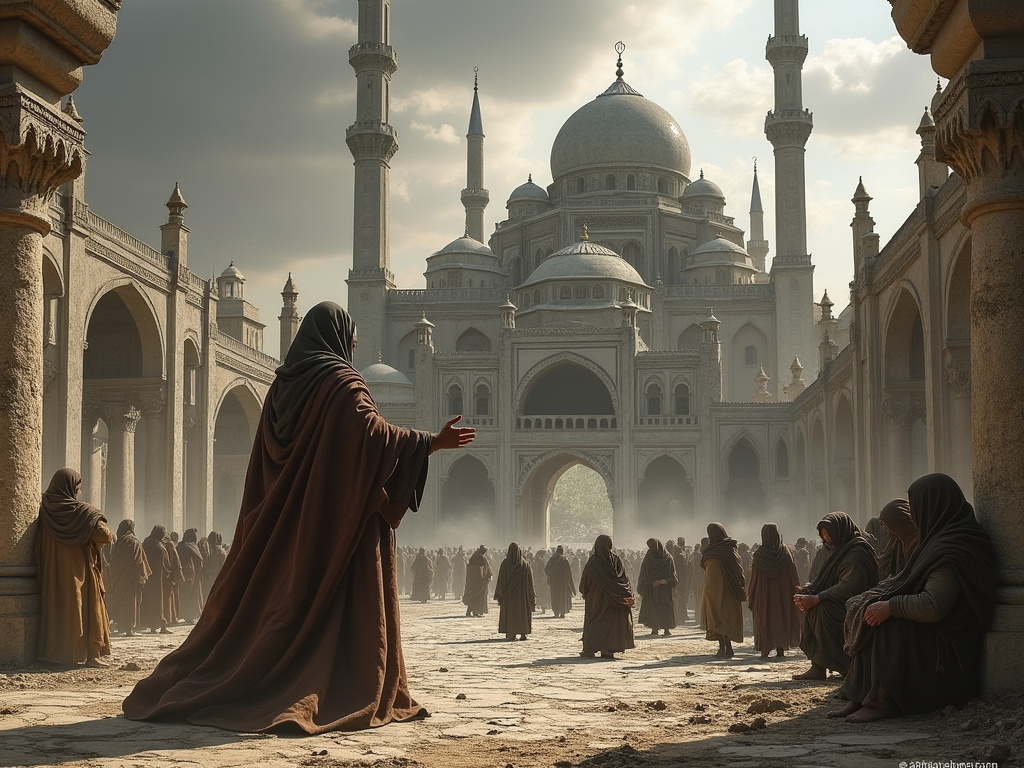
Below is an an excerpt from our upcoming publication, ‘This is how the generation of Saladin appeared and Jerusalem Re-captured’, by the late Dr. Majid Arsan al-Kilani.
As for the wealthy, Al-Ghazali intends by this category wealthy Muslims, especially those considering themselves righteous. The root of their delusion is that they did not understand the fundamental wisdom of wealth, nor the priorities in spending as imposed by circumstances and conditions.
The wisdom of wealth is to establish the foundations of social justice, and to help people be free from preoccupations that hinder worship. Among the best ranks of closeness to Allah is meeting all the needs of the poor, not giving them as little as possible. Perhaps this requirement necessitates spending the majority of one’s wealth. The deluded ones from the wealthy, according to Al-Ghazali, have avoided this principle and started using wealth to display superficial, ostentatious religiosity, void of sincerity. In our reading of Al-Ghazali’s analysis of the wealthy, we must pay attention to three observations.
The First Observation
Al-Ghazali preferred meeting of the needs of the poor over building mosques, performing Hajj, and optional prayers and fasting, basing this on fundamental Islamic principles, such as those mentioned in Surah Al-Ma’un [Quran 107], which defined the characteristic of those “who deny the Reckoning” as he “who shoves the orphan harshly away.” Such a one does not encourage social justice nor meet the needs of the poor. He explains that such are negligent about implementing the words of prayer into practical life, and, as the Surah continues, are those who are too “mean to lend others even the simplest household things.” [Quran 107:7]
As for the likes of such deniers of the Reckoning, their prayers are for show and basking in flattery, “who make sure to be seen of men” [Quran 107:6]. For which they deserve “wayl”. [Quran 107:4]. “Wayl,” as reported by the Prophet, upon him be peace, is a valley in Hell from which Hell itself seeks refuge seventy times a day.
The “orphan” mentioned in the verse, according to Ibn Abbas, is not limited to the young who have lost their parents but includes the adult who is deprived of strength and loses his rights, or has no support, making it easy for oppressors to weaken and take advantage of them.
Ibn Abbas also explains that “the simplest household things (al-ma’un)” likewise includes everything that helps a Muslim overcome his worries and problems so that he may devote himself to his religion, his prayers and recitations. What helps a Muslim devote himself to his religion more than meeting the necessities, requirements and needs of living?
The Second Observation:
Al-Ghazali did not stop at criticising the wealthy, but also criticised the poor who were lazy with work and content with helplessness and laziness, receding into corners to recite litanies, satisfied with whatever scraps of food or charity from the rich were thrown to them.
The Third Observation.
In his analysis of the types of deluded Muslims, Al-Ghazali was responding intelligently and wisely to the economic and social conditions of his time. We saw how the wealthy class took over everything for themselves, had ice brought to them in summer from the mountains of Lebanon or spent on a wedding party what would be enough for millions of hungry people. Meanwhile, the majority, when ravaged by famine and rising prices, could find nothing to stave off hunger except eating corpses and forbidden animals, the people preying on each other. The problems of the masses were compounded by the calamities that befell them as a result of the Crusader occupation and Batini attacks, turning millions of them into refugees and displaced persons. Allah does not ask a society suffering from such calamities to adorn mosques or perform Hajj for the first time, let alone repeating Hajj and Umrah again and again.[1]
Let us now proceed with Al-Ghazali as he categorises the deluded among the wealthy as follows:
The First Category
These are those who are keen on building mosques, schools, caravanserais, and bridges, and inscribe their names on them. These may be deluded in two ways.
Firstly, they build them from money acquired through bribes, oppression, plunder, and prohibited means. Secondly, they may have acquired the money lawfully, but in focusing on building mosques, they are deceived for two reasons.
-
The disease of showing off and love of praise. For there may be poor people in their neighbourhood or town, and spending on them is more important and better than building and adorning mosques. These rich ones find it easier to spend on mosques to show off to others.
-
They spend on decorating and adorning the mosque with forbidden engravings that distract the hearts of worshippers and catch their eyes.[2]
The Second Category:
Their most prominent characteristic is that they spend money in public gatherings to become famous among people, and they perform Hajj and Umrah frequently to be described as righteous and religious. Al-Ghazali points to this by saying:
“They may be eager to spend money on Hajj, performing it time after time, while perhaps leaving their neighbours hungry. That is why Ibn Masoud said: In the end times, there will be many pilgrims for no reason. Travel will be easy for them, and their provision will be ample, yet they will return deprived and bereft. One of them tumbles down with his camel on deserts and wastelands, and while his neighbour is trapped by the camel’s side, the other does not assist him.”[3]
The Third Category
These are those who occupy themselves with accumulating and hoarding wealth out of miserliness, then engage in physical acts of worship that do not require spending, such as fasting during the day, praying the night, and completing the Quran. Such people are greater need of ridding themselves of stinginess more than engaging in voluntary prayers and fasting. That is why it was said to Bishr al-Hafi, “So-and-so who is wealthy prays and fasts a lot!”
He replied, “That poor man has abandoned his own responsibility and entered into the responsibility of another. Rather, this person’s state should be feeding the hungry and spending on the needy - that is better for him than starving himself and praying for himself while hoarding worldly goods and withholding from the poor.”
The Fourth Category
These are those overcome by stinginess, so they only allow themselves to pay zakat. Then they give it from the inferior wealth they no longer want. They give it to the poor who serve them, or to those whose service they may need in the future, or they give it to someone recommended by a notable or dignitary to gain status with them, or to have a favour returned. All of this corrupts the intention and nullifies the deed, and its doer is deluded, thinking he is obeying Allah while he is sinful.
[1] “If only Muslim scholars in the present time would be inspired from this understanding of Al-Ghazali. They witness the Muslim populace ravaged by unemployment, famines, and housing crises. All of which makes them isolated targets for missionaries, the corruption of morals, prostitution, and sex trafficking. If only those repeating Hajj and Umrah would gather what they spend on buying gold, gifts, airfares, and taxis, and then distribute that to the war victims of Palestine, Bosnia, Africa, Syria, Lebanon, and other human slaughterhouses spread across the Muslim world!” – Author’s footnote (2002).
[2] Ihya Ulum al-Din, Imam al-Ghazali
[3] Ibid.
Originally published on the Dhikr Substack.