
Disciplining the Self
Al-Hakeem al-Tirmidhi's parable of the wild steed: how patient, deliberate training disciplines the self until it carries its rider through trial and commotion without fear.
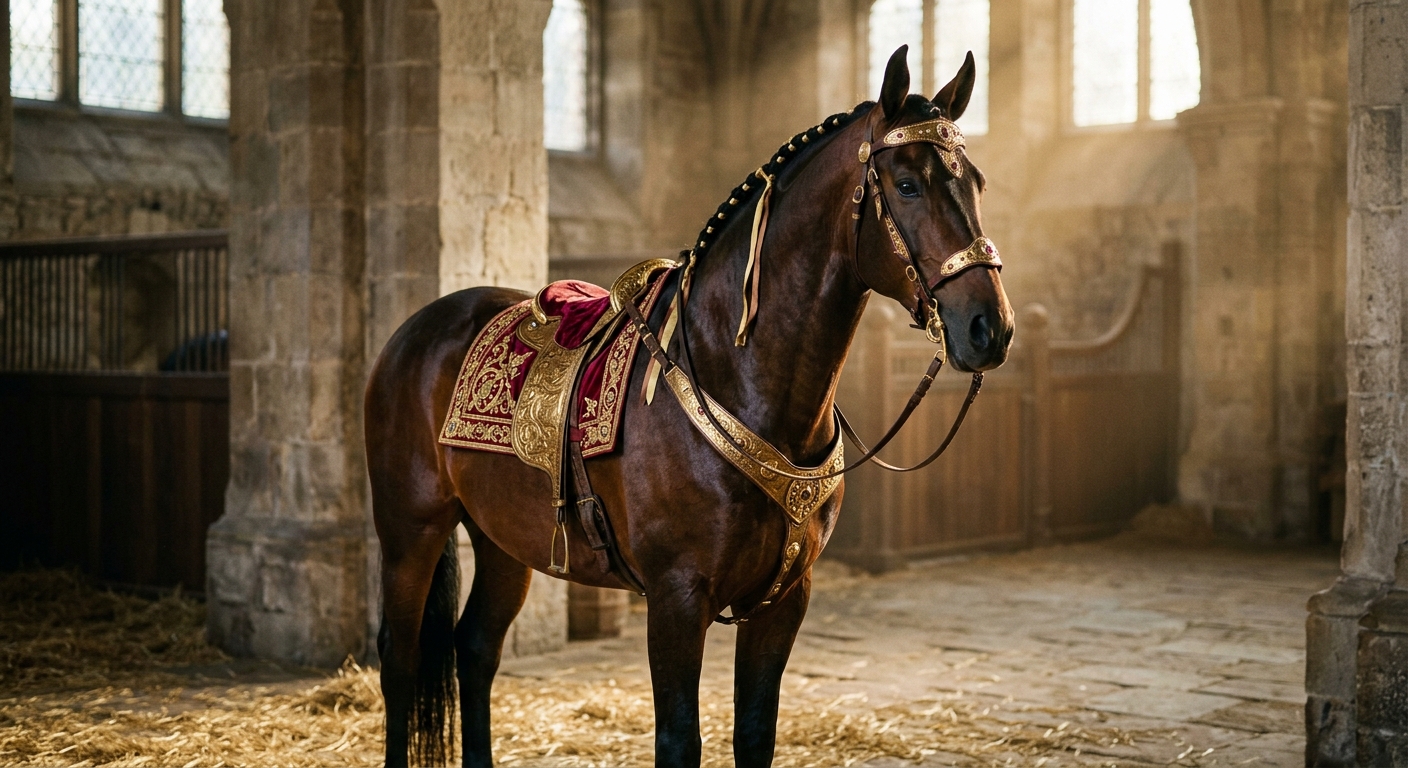
“Do you not see the wild steed — insignificant in value, taken from amongst its peers, accustomed to grazing wherever it pleased — how the trainer disciplines it to accept the saddle and bridle? How he works with it until it learns to carry a rider? How he conditions it to cross water and navigate places of great commotion, growing so accustomed to these trials that it no longer fears them? How its ears remain attentive while being ridden, turning right and left as its reins direct? Should it find no bridge and its reins are pulled firmly, it leaps to the other side — a bold and daring leap — placing itself in danger without faltering. And if it encounters commotion, it neither fears nor abandons its course. When its value is appraised, it is measured in gold — not silver — such is its worth. It is draped and adorned, fed the finest fodder, and stationed in the king’s own stable. It has risen to such standing that it is free from the burden of lowly labour and toil, from carrying crushing loads, from the sores of the saddle, and from the hardships endured by the common mule.
It abandoned lowly-desires and cast aside all concern for itself. When faced with risk, it did not flinch. When pushed to exhaustion, it did not falter. When its rider demanded long journeys, swift gallops, and daring leaps, it gave it all — holding nothing back. There was no wayward bolting, no stubbornness, no hesitation, no skittishness, no laziness, and no abandonment of discipline.
Yet before all of this, it had roamed freely in pastures, doing as it pleased. It was of little value, no different from the common beasts found about it. Now, the king himself has singled it out, refined its fodder, shielded it from the hands of others, honoured it, and relieved it of hardship and toil. All of this came about through its willingness to abandon the open pasture, to give up its lowly-desire and its idle playfulness, to leave behind the company of its kind, to bear fatigue for the sake of its owner — giving sincerely of itself, remaining ever-alert of heart, and fixing its attention wholly upon its master.
But consider the horse that, when trained, refused to submit to its master. It would not commit to its course, nor yield to discipline. Urge it forward and it would slow. Pull its reins and it would resist. Tie it down and it would break free. Draw it back and it would bolt. Where the master wished it to go, it withheld with force. Where the master wished it to stop, it pressed on in stubborn defiance — driven entirely by its own lowly-desires, unleashing in its urges the very power it had refused in obedience.
Even if the bridle brought it under a degree of control and checked its bolting, it did not stop out of submission to its master. It stopped only because of the restraint of the bridle and the pain biting at its mouth — fearful for its lips, its teeth, its tongue, and its palate. Only under such compulsion did it abandon its lowly-desire, and even then it continued to circle restlessly, unable to be still — for it had not yet conquered its lower self, nor surrendered it to the will of its rider. And so it urinated and defecated where it stood, and laid down wherever it pleased. If it came across any commotion, it shied away and abandoned its course, retreating backwards. Perhaps there was a well or a cliff behind it, into which it tumbled, injuring or killing itself. This is a lowly beast of bad character, unfit for a king. It is fit only for carrying cheap loads — and so you see it, always bent beneath a burden: sometimes emaciated, sometimes sore-backed and starving, ground down by harsh conditions and the relentless toil of labour. A beast among beasts, nothing more.”
- Extract from our forthcoming publication in shaa Allah, ‘Disciplining the Self’ by Al-Hakeem al-Tirmidhi (d. 320/923)
Originally published on the Dhikr Substack.